Architecture : design elements

17
Mai

Water Discus Hotel in Dubai

categories Architecture, Dream View, Hotels    

So sieht das Water Discus Hotel aus, das demnächst vor Dubai entstehen soll. Im Unterwasser-Bereich gibt es 21 Hotelzimmer, die spektakuläre Ausblicke auf die Unterwasserwelt bieten. Design: Deep Ocean Technology

Water Discus hotel with 21 underwater suites 30-meters (~100-feet) beneath the ocean’s surface to be built in Dubai. Design: Deep Ocean Technology

where is the cool

16
Mai

Sydney Beach House

categories Architecture, Dream View, Houses    

Strandhaus mit traumhaftem Meerblick in Sydney. Design und Architektur: Renato D’Ettorre

Sydney beach house with a dream view designed by the Italian architect Renato D’Ettorre.

photos: Mads Mogensen via casa abril

11
Mai

A Modern House in the Hamptons

categories Architecture, House Tour    

Ein modernes Haus in den Hampons… Architektur: Leroy Street Studio. Schönes Wochenende!

Beautiful Hamptons home designed by Leroy Street Studio. Happy weekend!

photos: Adrian Wilson for AD

30
Apr

Interview with Michael Graves

categories Architecture, Designer, Interviews    

“Even though I was one of the originators of Postmodernism, I don’t think in terms of style at all. I never have. I was simply trying to humanize Modernism. I was simply trying to find a way to make an architecture that didn’t leave me cold.”

Michael Graves for Architect Magazine

Some days ago I had the pleasure of talking with US architect Michael Graves. Michael Graves is often credited with moving American architectural thought from abstract modernism to post-modernism. His works range from grand projects (Humana Building in Louisville, Walt Disney World Swan and Dolphin Resort in Orlando, Steigenberger Hotel in Egypt, Resorts World Sentosa in Singapore) to designs for furniture, artifacts, jewelry and household items. Michael Graves has designed 350 buildings worldwide and planned more than 2.000 products, from hardware and lighting to teakettles. Identified as one of The New York Five, he taught at Princeton University in New Jersey for almost 40 years and has received countless honors for his architecture including the 2001 Gold Medal of the American Institute of Architects, and the 2010 AIA/ACSA Topaz Medallion for Excellence in Architectural Education. In December Michael Graves was named the winner of the 2012 Driehaus Prize, which celebrates architects who advance classicism in their work. He has 4 children, loves Rome, art books, Biedermeier Furniture and Tagliatelle Bugatti pasta.

Walt Disney World Swan and Dolphin Resort

What was the moment when you knew you would be an architect?

I tell a story that as a young boy, the thing that I could do best was draw. My mother was very nervous that I would try to become a fine artist. She knew it would be difficult to make a living as an artist. Therefore, she encouraged me to find a career path that incorporated drawing, and she suggested engineering or architecture. I asked her what an engineer did, and after she told me, I decided that I would be an architect, because I knew I didn’t want to do engineering. I was probably eight years old.


Is there something that connects all your projects?

Humanism is probably the thing that connects all of our projects. Whether planning a city, designing a building, designing a piece of furniture or designing a toaster, first and foremost I think about how people will interact with the design. I embraced this philosophy while studying in Rome, and it is the most important filter that I include in all of our projects, and it is the greatest thing I have instilled in our office. The terms have become almost cliché, but function drives form in good design at every scale.

Teakettle and peppermill by Michael Graves for Alessi

Looking back at your first project what design knowledge do you wish you had back then?

While I’m sure I would make certain design decisions differently today than I did on my first projects, I believe that every experience informs ones perspective, so I can’t say I wish I had any of today’s design knowledge when I designed my first project. Architecture is an experiential proposition for architects. You are always building on the last experience. Therefore, every experience is important.


What have been the rewards of practicing architecture?

Practicing architecture has been a real gift. I have traveled the world. I have met incredible people. Clients have become friends. Colleagues have become family. I believe we have made a real contribution. Teaching architecture has been equally rewarding. My students have had so much success, and I am proud to have contributed to their understanding of and approach to architecture and design.

Humana Building, Louisville, Kentucky

You have designed everything from skyscrapers to home products and have been honored with numerous awards. What do you consider to be your greatest achievement?

It is hard for me answer a question like that about myself, but the magazine Fast Company once said that my greatest design is my firm. I think that might be true. I am fortunate to have built an office full of the greatest designers in the world. From my partners who have been with me for decades to our most recent hire, everyone in our office is completely committed to design excellence, and works extremely hard to develop unique design solutions for our clients.


Your favorite books
?

I love books. Naming favorites is almost like naming favorite children or favorite designs. However, currently I have just finished reading Nicholas Fox Weber’s Le Corbusier: A Life. I have just started reading Robert Hughes.

Resorts World Sentosa, eco-resort on an island off the coast of Singapore

What’s your advice to upcoming architects?

The advice that I always give to young architects is to read EVERYTHING.


My signature question – what are the most important design elements?

Humanism.


photos: Michael Graves & Associates


20
Apr

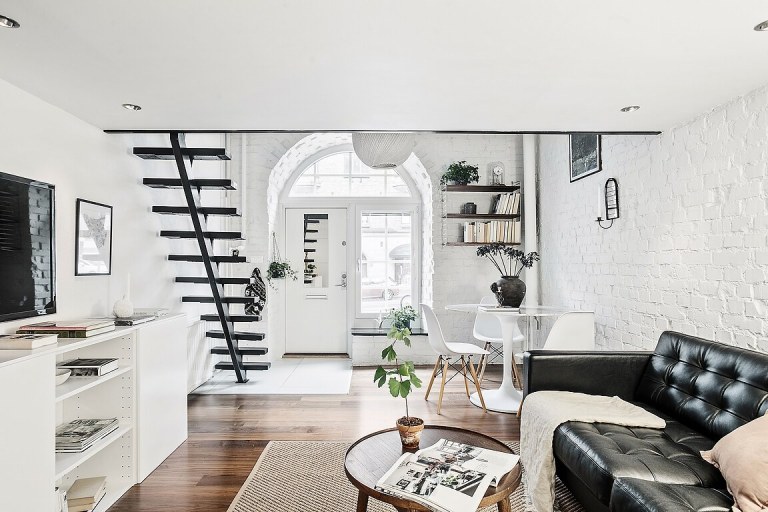
Stairs I Love

categories Architecture    

apricotsandapples

13
Apr

Interview with Steven Ehrlich

categories Architecture, Interviews    

“I’m fascinated with counterpointing a kind of primal, elemental feeling against a light, futuristic, technical experience.”

Steven Ehrlich, AD

Yesterday I had the great pleasure of talking with California-based architect Steven Ehrlich. His houses… from California to the Persian Gulf and West Africa… with their simple but powerful forms are for me one of the most beautiful modern-day classics. Steven Ehrlich has earned a total of seven AIA awards, Green Good Design Award and Maybeck Award for life-long achievement in design. He spent six years working as an architect and a teacher in Morocco and Nigeria after architecture school. Steven Ehrlich was a Peace Corps volunteer in the mid-1970s and that organization’s first architect in Marrakech. He has 3 daughters and 1 grandchild, loves mountain climbing and is also a visiting professor at USC.

Neutra Addition, Santa Monica

What was the moment when you knew you would be an architect?

When I was quite young (about 10) I used to love to build things…ie. tree houses, models, forts, etc.  For my 7th grade science fair project (12 years old), I designed a “solar home”.  About that time I was given a book about Frank Lloyd Wright. After being inspired, it finalized my decision to become an architect…which has never changed.


Is there something that connects all your projects?

All of our projects respond to people and place – the specificities of the local culture, site, climate and what the facilities will be used for. This is a unique design philosophy that our firm has evolved over the past 30+ years that we call Multicultural Modernism. The fusion of indoor and outdoor space is a big interest of mine and continues to be an important element in all of our projects.

Kreuzer-Schroeder Residence, Houston

Looking back at your first project what design knowledge do you wish you had back then?

As time progresses and experience increased…I have become more aware of the quality of craftsmanship one can demand during construction.


What have been the rewards of practicing architecture?

To make people happy in an environment that enhances the goals and demands of the project yet has the magic to lift spirits high.

At this phase of my career I am often asked to lecture and/or teach in foreign lands.  This gives me the opportunity not only to share our work and ideas but also a great way to meet new people and see new places.

Helal New Moon Residence, Persian Gulf

How do you think the role of the architect will change over the next years?

I believe the architect will need to get more involved in producing and developing of projects. For example, a current trend in the U.S. is the design/build delivering methodology. We first embraced this process on the Walter Cronkite School of Journalism. We were able to produce the structure in record time and great value for the University.


What do you consider to be your greatest achievement?

My 3 children and 1 grandchild.

I am proud of the body of work this past 30 years. I was awarded the Maybeck Award for life-long achievement in design, awarded by the American Institute of Architects of California.

I am also proud of the creative environment in our studio of 30 people weaving multiple talents together.

Macmillan Residence, San Jacinto Mountains

Your favorite books…

Non-fiction books about mountain climbing like “Into Thin Air” and “K2”.  Currently I am reading the biography of Steve Jobs.


What’s your advice to upcoming architects?

It is a very demanding profession…but if you MUST do it…it is the best thing in the world! I also advise you to “open your eyes and plagiarize” which is a funny way to say always be a good observer….this becomes part of your knowledge base. I encourage young soon to be architects to also experience and work/live in foreign lands and different cultures.

Steven Ehrlich’s house

My signature question – what are the most important design elements?

·         Connection of indoor and outdoor space

·         Contemporary clean lines with the warmth of natural materials

·         Embedded sustainability where the wisdom of logical and fundamental design decisions can greatly reduce demand.


photos: Steven Ehrlich Architects, Erhard Pfeiffer, Matthew Millman


21
Mrz

Oikia Panorama Voulas House in Athens

categories Architecture, Houses    

design: Dimitris Economou, photo: contemporist

9
Mrz

House in Namibia

categories Architecture, House Tour    

Dieses Haus in Namibia zieht meine Augen magisch an. Schönes Wochenende!

A look inside a house in Namibia (architecture: Leon Barnard). Happy Friday!

photos: Greg Cox via the wonderful Casa Tres Chic

30
Jan

Monday Dreaming

categories Architecture, Houses, Monday dreaming    

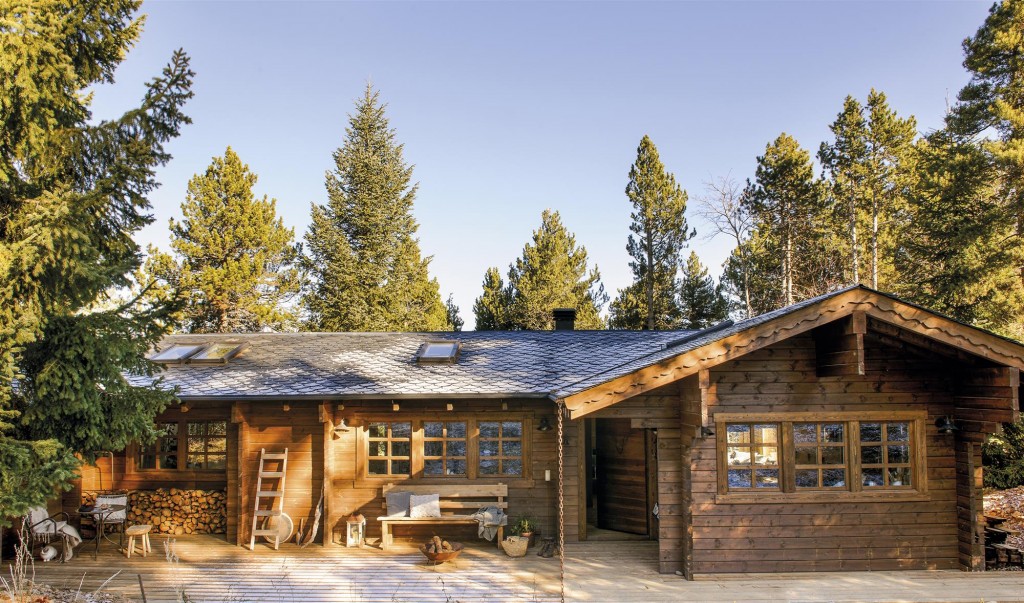
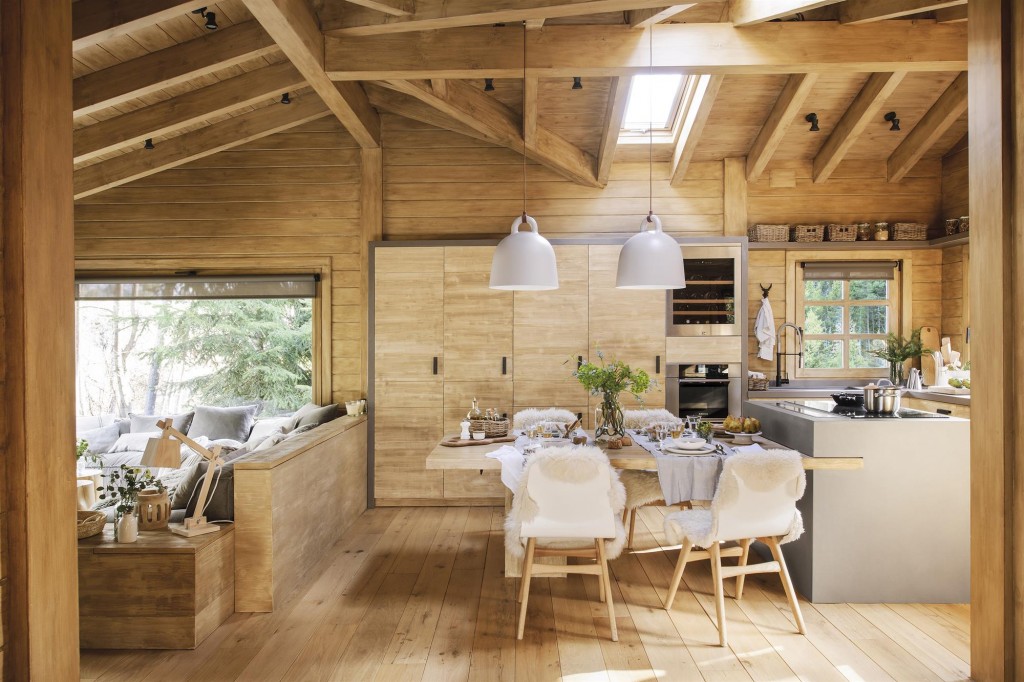
Montagsträume… Argentinien, ein Haus in Bariloche, Architektur: Alric Galindez. Einen guten Wochenstart!

Monday dreaming of… Argentina, a mountain house in Bariloche by Alric Galindez Arquitectos. Happy new week!


archdaily

17
Jan

Interview with Tom Kundig

categories Architecture, Designer, Interviews    

For me, the site is sacred. I like to spend time walking the site and getting to know it. The goal for the architecture is to help reveal and unfold the site, to frame the site and its aspect…I find inspiration in a lot of things but am particularly influenced by nature and how people to respond to it. I think small structures in big landscapes remind us of our place in the natural order of things…that we are part of a larger system. Small buildings encourage their users to engage with the world at large.

Tom Kundig for Architects + Artisans

Tom Kundig of Olson Kundig Architecs is one of the most recognized architects in the world. His houses have left an indelible mark on the residential design becoming modern-day classics. Tom Kundig has been awarded a total of thirty-seven AIA awards, and over seventy awards total. He loves mountaineering, rock climbing and sees his work as frame for nature. Enjoy the beautiful frames below and the interview…I sure did.

What was the moment when you knew you would be an architect?

I was raised in a culture of architecture and art. My father was an architect and a close family friend was artist Harold Balazs. As a kid, I worked for Harold in his studio and his approach to work, art and life continues to inspire me today. I didn’t originally want to be an architect. In college, I studied earth sciences and geophysics; I was also interested in art. It was during college that I realized that architecture was the perfect union of science and art…what Glenn Murcutt describes as the intersection of the rational and the poetic.

Is there something that connects all your projects?

I am a firm believer that everything you do…your life experiences…informs what you will do, and so forth.


Looking back at your first project what design knowledge do you wish you had back then?

When you start out as an architect, you don’t know what you don’t know.


What have been the rewards of practicing architecture?

Getting the chance to meet interesting people and work on interesting projects and sites. It helps, too, to have talented teams of people to work with and we are fortunate to have that. Ultimately, the success of our work is determined by those we design for, and whether what we do now holds up over time…that’s true sustainability.


How do you think the role of the architect will change over the next years?

No doubt it will change. I think the role of the architect will become more connected to the craft of building.

To date, you have been awarded a total of thirty-seven AIA awards, and over seventy awards total. What do you consider to be your greatest achievement?

Having clients tell me years after a project was completed that they continue to enjoy their house, and that it is a source of continual discovery, is a huge thrill.


Your favorite books?

Zen and the Art of Motorcycle Maintenance, by Robert M. Pirsig

In Praise of Shadows, by Jun’ichiro Tanizaki

The Wisdom of Insecurity, by Alan Watts

One Flew Over the Cuckoo’s Nest, by Ken Kesey

A River Runs Through It, by Norman MacLean


What’s your advice to upcoming architects?

Have patience. The practice of architecture is complicated…there is so much to learn.


My signature question – what are the most important design elements?

Aside from the client’s program, the site is super important…the first time I walk a site is the most important…those first impressions inform everything that comes after. I think it is important to make the interaction with architecture meaningful…that can be achieved through the use of materials, by shifts in scale or function, and through the experience of space.

Next Page →